20 March 2018
In developed or western countries, almost everyone drinks a great deal of milk. As a natural or organic dairy product, milk may be helpful to young people and those 'yang-bodied'. However, for others, milk actually does more harm than good. From yangsheng point of view, milk belongs to yin food; drinking too much milk will definitely destroy the balance between yin and yang (ph or the balance between acid and alkaline in a narrow but more scientific sense) within the body, and thus may cause many different kinds of diseases. At least, drinking milk can cause the loss of calcium and thus bone problems. Such being the case, we, especially ageing and yin-bodied people, should drink milk with high discretion.
Tuesday, 20 March 2018

Friday, 16 March 2018
WTY-13: Yangsheng and Self-Attitude
5 Mar 2018
For all yangsheng practitioners, it is not only helpful but simply necessary to develop and maintain a sound attitude towards themselves. Indeed, whether we can live a healthy and happy life often depends heavily on the way we look at who and what we ourselves have been. If we treat ourselves well and fairly with all the love and respect we deserve, we will surely become accomplished yangsheng practitioners.
For all yangsheng practitioners, it is not only helpful but simply necessary to develop and maintain a sound attitude towards themselves. Indeed, whether we can live a healthy and happy life often depends heavily on the way we look at who and what we ourselves have been. If we treat ourselves well and fairly with all the love and respect we deserve, we will surely become accomplished yangsheng practitioners.
Wednesday, 14 March 2018
YE&T-13: Abdominal Breathing
14 Feb 2018
Abdominal breathing is what the renowned yangsheng expert Zhu Zongxiang calls '1' in his '3-1-2 Meridian Exercise'. For him as well as for all of us, it is a helpful health exercise to practice abdominal breathing 10 mintues at least each time, twice every day. During the past decades, Zhu has been doing this breathing exercise persistenly while lying down on bed, once before getting up in the morning, and once after goint to be at night. This exercise can be done singlarly, separately or together with the other two - point massaging and squatting. For Zhu, it has been particularly helpful to remain young physically.
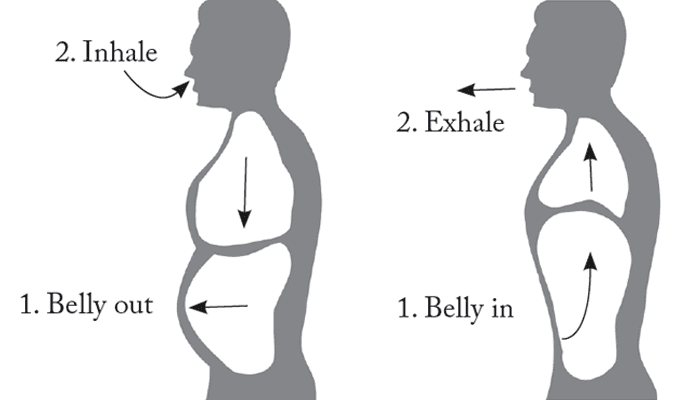
Abdominal breathing is what the renowned yangsheng expert Zhu Zongxiang calls '1' in his '3-1-2 Meridian Exercise'. For him as well as for all of us, it is a helpful health exercise to practice abdominal breathing 10 mintues at least each time, twice every day. During the past decades, Zhu has been doing this breathing exercise persistenly while lying down on bed, once before getting up in the morning, and once after goint to be at night. This exercise can be done singlarly, separately or together with the other two - point massaging and squatting. For Zhu, it has been particularly helpful to remain young physically.
Monday, 12 March 2018
GYH-13: Regularly Keeping Windows Open
12 Mar 2018
It's a good habit to open windows regularly every day to let in fresh air. The best time to do so is believed to fall between 9 and 11 am, or 2 and 4 pm. Usually, an hour or so would be long enough to change the air indoors for the whole day. Some people keep the bedroom window slightly open even at night, and this is certainly not a bad habit, since most bedrooms are more of a tight enclosure during sleeping time.
It's a good habit to open windows regularly every day to let in fresh air. The best time to do so is believed to fall between 9 and 11 am, or 2 and 4 pm. Usually, an hour or so would be long enough to change the air indoors for the whole day. Some people keep the bedroom window slightly open even at night, and this is certainly not a bad habit, since most bedrooms are more of a tight enclosure during sleeping time.
Saturday, 10 March 2018
WTY-12: The Key to Longevity
10 Mar 2018
As clearly revealed in the scientific research work done by Elizabeth Blackburn, the well known Australian-American Nobel laureate, the key to slowing ageing or increasing one's life expectancy lies 25 % in what one eats, 25 % in other factors combined, but as high as 50 % in what may be called one's psychological equilibrium. That is to say, to develop and maintain a 'good' mentality is to live a healthy and long life, whereas eating and doing exercise are secondary.
Examples in real life are abundant. According to many statistic studies carried out in and outside China in recent years, those who have been living up to more than a century, a much longer life than the vast majority of us are almost unexceptionally 'good-natured': no matter what reason, they seem to have been born to be cheerful, optimistic, and relatively easy to feel satisfied.
So long as you and I manage to have a balanced psychology, we can live longer than at least we ourselves are 'meant' to.
As clearly revealed in the scientific research work done by Elizabeth Blackburn, the well known Australian-American Nobel laureate, the key to slowing ageing or increasing one's life expectancy lies 25 % in what one eats, 25 % in other factors combined, but as high as 50 % in what may be called one's psychological equilibrium. That is to say, to develop and maintain a 'good' mentality is to live a healthy and long life, whereas eating and doing exercise are secondary.
Examples in real life are abundant. According to many statistic studies carried out in and outside China in recent years, those who have been living up to more than a century, a much longer life than the vast majority of us are almost unexceptionally 'good-natured': no matter what reason, they seem to have been born to be cheerful, optimistic, and relatively easy to feel satisfied.
So long as you and I manage to have a balanced psychology, we can live longer than at least we ourselves are 'meant' to.
Thursday, 8 March 2018
YR-12: Steamed Pear for Cough
8 March 2018
This is one of the many heabal/natural recipes for cough, especially caused by a cold:
- ingredients:
1. one pear;
2. 15-20 peppercorns (or 15 - 20 g of tendrilleaf fritillary bulb micro-powder);
3. 2 lumps of crystal sugar ( or a spoonful of honey)
-methods:
1. wash the pear well and cut the top;
2. dig out the seeds and put in the peppercorns or the powder);
3. put back the top;
4. steam the pear for about 30 minutes;
5. eat the pear and drink the soup twice daily

This is one of the many heabal/natural recipes for cough, especially caused by a cold:
- ingredients:
1. one pear;
2. 15-20 peppercorns (or 15 - 20 g of tendrilleaf fritillary bulb micro-powder);
3. 2 lumps of crystal sugar ( or a spoonful of honey)
-methods:
1. wash the pear well and cut the top;
2. dig out the seeds and put in the peppercorns or the powder);
3. put back the top;
4. steam the pear for about 30 minutes;
5. eat the pear and drink the soup twice daily
Tuesday, 6 March 2018
BHH-12: Often Getting Drunk
6 March 2018
When drinking liquors, wine or even bear, some people habitually get drunk to varying degrees. This is undoubtedly a bad habit, because each time you drink even slightly more than your body can manage, you will do as much damage to your liver system as a hepatitis does. If you begin to feel dizzy, you have already drunk too much. However, as a popular saying goes, sipping may do you some good, but over-drinking is definitely detrimental to your health.
When drinking liquors, wine or even bear, some people habitually get drunk to varying degrees. This is undoubtedly a bad habit, because each time you drink even slightly more than your body can manage, you will do as much damage to your liver system as a hepatitis does. If you begin to feel dizzy, you have already drunk too much. However, as a popular saying goes, sipping may do you some good, but over-drinking is definitely detrimental to your health.
Friday, 2 March 2018
WTY-11:Emotion Control and Positive Mentality
1 Mar 2018
Anyone who hopes to develop a positive mentality or seek happiness self-consciously has to learn how to manage his or her emotions. People might punch walls hard in anger, yell aloud in depression or get drunk in sadness. Such ways to deflate one's pent-up emotions may prove temporarily effective, and certainly less destructive than become physically violent, but there are always more constructive ways to release our intensive negative feelings. For example, we can seek professional help from psychotherapists or detract our attention by engaging ourselves in various expressive or creative activities (like singing, writing, painting, working, meditating, exercising, etc.).
Anyone who hopes to develop a positive mentality or seek happiness self-consciously has to learn how to manage his or her emotions. People might punch walls hard in anger, yell aloud in depression or get drunk in sadness. Such ways to deflate one's pent-up emotions may prove temporarily effective, and certainly less destructive than become physically violent, but there are always more constructive ways to release our intensive negative feelings. For example, we can seek professional help from psychotherapists or detract our attention by engaging ourselves in various expressive or creative activities (like singing, writing, painting, working, meditating, exercising, etc.).
No matter what, only those who have developed a strong enough innerself can control their emotions in the healthiest and most natural way. Put another way, to develop a positive mentality, one must learn to transcend one's immediate experience through spiritual cultivation.
Growing strong inside is the 'best' way to build a positive mentality. Having a truly powerful innerself is as helpful as having a strong and sincerely religious faith for yangsheng.
Wednesday, 28 February 2018
YE&T-12: 3-Point Massaging
28 Feb 2018
As part of the renowned yangsheng expert Zhu Zongxiang's '3-1-2 Meridian Exercise', 3-point massaging can be performed alone or separately. More specifically, you can finger-press or massage these three meridian points - higu, neiguan and zhushanli (as shown in the following pictures), each for about five minutes, twice every day. This exercise is particularly helpful becausey by masaging these three key points, you can maintain a robust meridian system as a whole or your general physical well being.  hegu point  neiguan point  zushanli point |
Monday, 26 February 2018
GYH-12: Eating a Rich Breakfast
26 Feb 2018
For one reason or another, many young and working people either eat an overly simple breakfast or do not eat anything at all. However, because our body needs much energy to function well in the morning, we should habitually eat a rich breakfast - rich in nutrients. While anything oily, fatty, sweet and salty ought to be avoided, such breakfast should include an egg, some lean meat, whole wheat bread and (soy) milk or rice pudding. For elder people who have enough time, it is more helpful to eat 'yangsheng porridge', an boiled egg and vegetables. As a chinese saying goes, a breakfast good enough for an emperor helps make one happy and healthy for the whole day.
For one reason or another, many young and working people either eat an overly simple breakfast or do not eat anything at all. However, because our body needs much energy to function well in the morning, we should habitually eat a rich breakfast - rich in nutrients. While anything oily, fatty, sweet and salty ought to be avoided, such breakfast should include an egg, some lean meat, whole wheat bread and (soy) milk or rice pudding. For elder people who have enough time, it is more helpful to eat 'yangsheng porridge', an boiled egg and vegetables. As a chinese saying goes, a breakfast good enough for an emperor helps make one happy and healthy for the whole day.
Saturday, 24 February 2018
WTY-11: Zhu Zongxiang and His Yangsheng Secret
24 Feb 2018
Zhu Zongxiang, born in 1923, is one of the best known and most achieved yangsheng expert in China today. Despite his old age, he not only looks like but 'is' a young man as well: almost every test result of his physical condition is as perfectly normal as that of a healthy 30-year-old.
His secret is the so-called '3-1-2 meridian exercise,' which he himself invented decades ago, and has been practising twice daily ever since then. (For more detail, we will introduce it briefly in our wednesday postings in due time.)
More important, to find or even 'invent' an exercise most suitable to you and do it persistently is one of the keys to your long-term physical well being.

Thursday, 22 February 2018
YR&T-11: Rice Pudding
22 Feb 2018
- ingredients: 1. peanuts; 2. red beans; 3. black rice; 4. semen coicis; 5: taro; 6. dates; 7. mung beans; 8. glutinous rice; 9. millet - methods: 1. wash well a half-handful of each ingredient (except dates and taro); 2. soak 10 or so dates for about 10 minutes; 3. peel off about 100 g of taro and cut it into small pieces; 4. put peanuts, red beans, semen coicis and black rice in about 1000 ml of water and cook them together for about 30 minutes; 5. add the taro, dates, glutinous rice, mung beans and millet to the pot and 6. continue to cook everything together for another one hour or so. This pudding is particularly conducive to health for ageing people, and thus should be part of daily diet.  |
Tuesday, 20 February 2018
BHH-11: Bathing Too Often
27 Feb 2018
In terms of personal hygiene, it is undoubtedly a good habit to take a bath or shower every day or even twice a day. However, from a yangsheng perspective, it is a bad habit because taking a bath/shower too frequently would do more harm than good to one's skin and energy system (or qi and blood circulation). For seniors, who has ageing skin and whose qi and blood system has become increasingly weaker, it is particularly unsuitable to take a bath/shower daily. To maintain personal hygiene, it would be better for elders to do so only when it is necessary or just once (or twice at most) per week.
In terms of personal hygiene, it is undoubtedly a good habit to take a bath or shower every day or even twice a day. However, from a yangsheng perspective, it is a bad habit because taking a bath/shower too frequently would do more harm than good to one's skin and energy system (or qi and blood circulation). For seniors, who has ageing skin and whose qi and blood system has become increasingly weaker, it is particularly unsuitable to take a bath/shower daily. To maintain personal hygiene, it would be better for elders to do so only when it is necessary or just once (or twice at most) per week.
Friday, 16 February 2018
WTY-11: Dialectic Perspective for Yangsheng Practitioners
16 February 2018
If you were not 'born' with a cheerful personality or do not have a strong and sincere religious faith either to help equip youself with a positive mentality, you can certainly try to develop a dialectic outlook to do so. Indeed, the wisest and most mature way of looking at what is happening to and around us right now is to see it in terms of constant change: bad things can turn good, and vice versa.
No one likes suffering or hardship, be it physical, emotional, intellectual or spiritual, and it takes a saint to enjoy it in the moment. However, once you are ready to see and believe that everything we are experience is changing, you already have a basically positive mentality which is essential to yangsheng.
Since good things can turn bad, you should remain on alert and take preventative steps. If you are going through something really bad, remember it is coming closer to an end every minute, while you can always turn it for the better by learning something from it at least.
A dialectic world outlook is the best and strongest philosophical foundation for a positive mentality. For those yangsheng practitioners with a 'negative' temperament or without a religious faith, such outlook is particularly helpful. To adopt this outlook is to convert one to true wisdom.
Wednesday, 14 February 2018
YE&T-11: Massaging Yongquan Point
14 Feb 2018
Of all the 365 meridian points in the human body, the yongquan point on the feet is one of the most important. Massaging this point with a thumb tip or any other hard pointed object is a good way to maintain good health. In particular, those with high blood pressure, deficiency of the kidney (or weakened sexuality), bone problems and too many toxic elements in the body should practice such self-massaging on a daily basis.
Rubbing, pressing or massaging the yongquan point for 3 to 5 minutes, once in the morning, once before bedtime, you will find this exercise very helpful after you do it persistently long enough.

Of all the 365 meridian points in the human body, the yongquan point on the feet is one of the most important. Massaging this point with a thumb tip or any other hard pointed object is a good way to maintain good health. In particular, those with high blood pressure, deficiency of the kidney (or weakened sexuality), bone problems and too many toxic elements in the body should practice such self-massaging on a daily basis.
Rubbing, pressing or massaging the yongquan point for 3 to 5 minutes, once in the morning, once before bedtime, you will find this exercise very helpful after you do it persistently long enough.
Monday, 12 February 2018
GYH-11: Defecating Every Morning
12 February 2018
As our large intestines begin to work actively between 5 and 7 in the morning, the best or most natural time for defecating falls within this period. That is to say, it is a good habit to make a bowel movement after getting up or before breakfast every morning. If you can do so once a day without any difficulty, you are in reasonably good health.
As our large intestines begin to work actively between 5 and 7 in the morning, the best or most natural time for defecating falls within this period. That is to say, it is a good habit to make a bowel movement after getting up or before breakfast every morning. If you can do so once a day without any difficulty, you are in reasonably good health.
Saturday, 10 February 2018
WTY-10: Simple Ways to Examine One's Own Health Condition
10 Feb 2018
According to yangsheng experts, one does not have to go to a doctor for a physical check-up every year. Actually there are five criteria to tell if you are a 'normal' or basically healthy person::
1. Eat well - you have a good appetite and no few food taboos;
2. Sleep well - you can fall asleep relatively in an easy manner and have few nightmares;
3. Discharge well - you have no trouble pissing, shitting, sweating;
4. Move well - you can walk, jump, run as you would like;
5. Sense well - you can see, hear, smell, taste, feel like everybody else does.
According to yangsheng experts, one does not have to go to a doctor for a physical check-up every year. Actually there are five criteria to tell if you are a 'normal' or basically healthy person::
1. Eat well - you have a good appetite and no few food taboos;
2. Sleep well - you can fall asleep relatively in an easy manner and have few nightmares;
3. Discharge well - you have no trouble pissing, shitting, sweating;
4. Move well - you can walk, jump, run as you would like;
5. Sense well - you can see, hear, smell, taste, feel like everybody else does.
Thursday, 8 February 2018
YR-10: Fungus-Doufu Soup
8 Feb2018
- Ingredients
1. doufu (200-300g; cut into small peces);
2. black fungus (20-30g; soak in water for a couple of hours before washing it well);
3. green onion (cut into small pieces);
4. garlic oil (garlic cut into small pieces and fried well in oil)
- Steps
1. boil water in a pot;
2. add doufu and black fungus into the boiling water and boil them together for 5-8 minutes;
3. right after adding green onion, garlic oil and other spices of one's preferences, turn off the fire

- Ingredients
1. doufu (200-300g; cut into small peces);
2. black fungus (20-30g; soak in water for a couple of hours before washing it well);
3. green onion (cut into small pieces);
4. garlic oil (garlic cut into small pieces and fried well in oil)
- Steps
1. boil water in a pot;
2. add doufu and black fungus into the boiling water and boil them together for 5-8 minutes;
3. right after adding green onion, garlic oil and other spices of one's preferences, turn off the fire
Tuesday, 6 February 2018
BHH-10: Eating Too Fast
6 Feb 2018
Probably because they have a good appetite, many people eat very fast. Without chewing it really well, they swallow their food as if they cannot wait for the next mouthful of it. However, this is a very bad habit. Eating too fast for too long definitely does much harm to your digestive system. As almost every yangsheng expert has pointed out, chewing each mouthful of food at least 20-30 times before swallowing it is not only necessary but also helpful to maintain good health.
Probably because they have a good appetite, many people eat very fast. Without chewing it really well, they swallow their food as if they cannot wait for the next mouthful of it. However, this is a very bad habit. Eating too fast for too long definitely does much harm to your digestive system. As almost every yangsheng expert has pointed out, chewing each mouthful of food at least 20-30 times before swallowing it is not only necessary but also helpful to maintain good health.
Friday, 2 February 2018
WTY-10: The Ambivalence between reason and feeling
2 February 2018
Life is full of contradictions, dilemmas, pitfalls, setbacks and ambivalences. The biggest ambivalence is that we fully understand and even decide to do something good for the sake of our physical or psychological wellbeing, namely, yangsheng, but find ourselves simply unable to do so in practice. More specifically, everyone of us may desire to have a positive mentality, but just cannot help feeling lousy, depressed, worried or afraid when experiencing something bad in reality.
This ambivalence between reason and feeling is the biggest one for the yangsheng practitioner.
Life is full of contradictions, dilemmas, pitfalls, setbacks and ambivalences. The biggest ambivalence is that we fully understand and even decide to do something good for the sake of our physical or psychological wellbeing, namely, yangsheng, but find ourselves simply unable to do so in practice. More specifically, everyone of us may desire to have a positive mentality, but just cannot help feeling lousy, depressed, worried or afraid when experiencing something bad in reality.
This ambivalence between reason and feeling is the biggest one for the yangsheng practitioner.
Indeed, who would really feel thankful and celebratory when s/he is going through an ugly divorce, losing a legal battle, falling into a victim of accident, getting a pink slip, or becoming hopeless of recovery? Who would and could feel good about suffering?
To overcome such ambivalence, there are three major approaches:
1/ To convert ourselves to God - That's why those with a religious faith usually live a healthier, happier and longer life;
2/ To convert ourselves to wisdom - By really subscribing to, and habitually practising (folk or philosophical) wisdom;
3/ To convert ourselves to 'pragmatism'- By exploring various practical methods and techniques.
1/ To convert ourselves to God - That's why those with a religious faith usually live a healthier, happier and longer life;
2/ To convert ourselves to wisdom - By really subscribing to, and habitually practising (folk or philosophical) wisdom;
3/ To convert ourselves to 'pragmatism'- By exploring various practical methods and techniques.
Those having an optimistic personality are really lucky in terms of yangsheng, but people who may have been 'born' as pessimistic, cynical and introvert as me can also gain a positive mentality through active learning and conscious practice.
Wednesday, 31 January 2018
YE&T-10: Toe Standing
31 Janurary 2018
A well known Chinese yangsheng saying goes: people start getting old down from the feet. To slow down the ageing process, it is very helpful to do toe standing exercise. This is the basic way how to do it:
1. put your two feet in a parallel position and stand up straight on your toes as tall as possible;
2. hold your toe-standing posture for 2 seconds before letting your heels down;
3. repeat the process 108 times on a daily basis.
A well known Chinese yangsheng saying goes: people start getting old down from the feet. To slow down the ageing process, it is very helpful to do toe standing exercise. This is the basic way how to do it:
1. put your two feet in a parallel position and stand up straight on your toes as tall as possible;
2. hold your toe-standing posture for 2 seconds before letting your heels down;
3. repeat the process 108 times on a daily basis.
Monday, 29 January 2018
GYH-10: Drinking Yangsheng Tea Daily
29 January 2018
Besides (boiled) water, the second best or healthiest drink is all kinds of 'yangsheng tea,' which can be divided into two major categories: single-ingredient tea (such as green tea, ooloong tea, or coffee) and multi-ingredient tea (such as ginger-date tea and wolfberry-astragalus tea). While such health drinks are all herbal and organic, they will produce good health results if you consume them on a regular basis and selectively according to your specific health conditions. In other words, you should choose to drink what is most suitable to you at the best time. If you are not sure, green tea and coffee might be the most viable choice.
Drinking yangsheng tea daily is certainly one of the best living habits any practitioner may have.
Besides (boiled) water, the second best or healthiest drink is all kinds of 'yangsheng tea,' which can be divided into two major categories: single-ingredient tea (such as green tea, ooloong tea, or coffee) and multi-ingredient tea (such as ginger-date tea and wolfberry-astragalus tea). While such health drinks are all herbal and organic, they will produce good health results if you consume them on a regular basis and selectively according to your specific health conditions. In other words, you should choose to drink what is most suitable to you at the best time. If you are not sure, green tea and coffee might be the most viable choice.
Drinking yangsheng tea daily is certainly one of the best living habits any practitioner may have.
Saturday, 27 January 2018
WTY-9: Ways to Prevent Cancer
27 January 2018
1/ Open windows at least half an hour daily (especially to prevent lung cancer);
2/ Wipe your back with a dry towel for 10 minutes or until you feel warm on a regular basis;
3/ Eat raw garlic (cut and exposed to air for more than 10 min) and green onion as often as possible (esp. to prevent stomach cancer)
4/ Drink soy milk (esp. to prevent breast cancer, endometrial cancer, cervical cancer and prostate cancer), but such cancer patients and those suffering from peptic ulcer, gastritis and gout should avoid it;
5/ Walk for at least half an hour daily (esp. to prevent colorectal cancer and pancreatic cancer);
6/ Drink 6 cups of water (roughly 240g each) daily (esp. to reduce the risk of bladder cancer for men, and colon cancer for women by 45%);
7/ Sunbathing for 15 min daily (esp. to prevent breast cancer, colon cancer, prostate cancer, ovarian cancer and gastric cancer), but too long would increase the risk of skin cancer;
8/. Drink 4 cups of green tea daily (to reduce the risk of cancer by 40%);
9/ Chew your food at least 30 times before swallow (esp. to prevent gastrointestinal cancer);
10/ Sleep 7 hours every night (esp. to prevent breast cancer);
11/ Reduce sugar intake (esp. to prevent pancreatic cancer); and
12/ Eat red meat with a cup of red wine (esp. to prevent colon cancer)
1/ Open windows at least half an hour daily (especially to prevent lung cancer);
2/ Wipe your back with a dry towel for 10 minutes or until you feel warm on a regular basis;
3/ Eat raw garlic (cut and exposed to air for more than 10 min) and green onion as often as possible (esp. to prevent stomach cancer)
4/ Drink soy milk (esp. to prevent breast cancer, endometrial cancer, cervical cancer and prostate cancer), but such cancer patients and those suffering from peptic ulcer, gastritis and gout should avoid it;
5/ Walk for at least half an hour daily (esp. to prevent colorectal cancer and pancreatic cancer);
6/ Drink 6 cups of water (roughly 240g each) daily (esp. to reduce the risk of bladder cancer for men, and colon cancer for women by 45%);
7/ Sunbathing for 15 min daily (esp. to prevent breast cancer, colon cancer, prostate cancer, ovarian cancer and gastric cancer), but too long would increase the risk of skin cancer;
8/. Drink 4 cups of green tea daily (to reduce the risk of cancer by 40%);
9/ Chew your food at least 30 times before swallow (esp. to prevent gastrointestinal cancer);
10/ Sleep 7 hours every night (esp. to prevent breast cancer);
11/ Reduce sugar intake (esp. to prevent pancreatic cancer); and
12/ Eat red meat with a cup of red wine (esp. to prevent colon cancer)
Thursday, 25 January 2018
YR-9: Yangsheng Tea for Winter
25 January 2018
-ingredients:
1/ 1 or 2 spoonful of brown sugar if preferred
2/ 8-10 dates
3/ 1 piece of fresh ginger
4/ 800-1000 ml of water
-steps:
1/ cut the dates and ginger into small pieces after washing them well;
2/ boil the dates and ginger for 20 minutes;
3/ add the sugar if preferred;
4/ filter the water
Drink the 'tea', and eat the dates better before or at lunchtime.


-ingredients:
1/ 1 or 2 spoonful of brown sugar if preferred
2/ 8-10 dates
3/ 1 piece of fresh ginger
4/ 800-1000 ml of water
-steps:
1/ cut the dates and ginger into small pieces after washing them well;
2/ boil the dates and ginger for 20 minutes;
3/ add the sugar if preferred;
4/ filter the water
Drink the 'tea', and eat the dates better before or at lunchtime.
Tuesday, 23 January 2018
BHH-9: Slouching
23 January 2018
Most of us slouch most of the time. This is a bad habit because the lazy posture would cause spine-related problems, including neck, chest and back pain. More importantly, such problems could in turn cause internal organs to malfunction. The reason lies in the way prolonged poor postures inevitably change our bone structure in the long run. Once our bone structure changes, our internal organs would be 'squeezed' and suffer as a result.
Most of us slouch most of the time. This is a bad habit because the lazy posture would cause spine-related problems, including neck, chest and back pain. More importantly, such problems could in turn cause internal organs to malfunction. The reason lies in the way prolonged poor postures inevitably change our bone structure in the long run. Once our bone structure changes, our internal organs would be 'squeezed' and suffer as a result.
Friday, 19 January 2018
WTY-9: Yangsheng and the Confrontation with Reality
19 January 2018
The most important impact that life may have upon us is what is happening to us in the moment. More often than not, whether we feel happy or not has the most to do, in other words, with the way we see and face the concurrent situation we find ourselves in. For the sake of yangsheng, to live a happy life, it is therefore imperative to develop and sustain the right attitude towards what we are experiencing right now.
All the happenings or non-happenings we are facing can be divided into three large categories: good/desirable, bad/undesirable, and whatever else in between.
If something good is happening to you, you well know how to face it, but keep in mind that good things can be bad in disguise, or may turn to bad in time while you enjoy or celebrate it.
If nothing particular is happening, you should learn to wait for something good to come. (If you keep thinking or worrying about bad things, they most probably will come.)
If something bad, really bad is happening to you, you'd better keep reminding yourself of the following:
1/ Something bad can be a good thing in disguise, or may turn to good in time;
2/ Bad things could have been much worse, and therefore may actually be worth celebrating;
3/ Each negative experience is meant to prepare you for a better future.
1/ Something bad can be a good thing in disguise, or may turn to good in time;
2/ Bad things could have been much worse, and therefore may actually be worth celebrating;
3/ Each negative experience is meant to prepare you for a better future.
Once you integrate into your mindset Lao Zi's teaching 'Luck and misfortune always come in turns' (福兮祸所伏, 祸兮福所倚 ), you will certainly be able to develop a basically positive mentality.
Wednesday, 17 January 2018
YE&T-9: Tongue Exercise for the Brain
17 Janurary 2018
For the well being of your brain, or to prevent Alzheimer's disease, it's helpful to do this group of tongues exercies:
1/ Reach out your tongue as far out as possible before withdraw it back;
2/ Wave your tongues outside your mouth from left to right or the other way around;
3/ Bite your tongue everywhere as hard as you do not feel hurt.
Do each set of the exercises 36 rounds once a day.
For the well being of your brain, or to prevent Alzheimer's disease, it's helpful to do this group of tongues exercies:
1/ Reach out your tongue as far out as possible before withdraw it back;
2/ Wave your tongues outside your mouth from left to right or the other way around;
3/ Bite your tongue everywhere as hard as you do not feel hurt.
Do each set of the exercises 36 rounds once a day.
Monday, 15 January 2018
GYH-9: Brushing Teeth after Food Intake
15 January 2018
As there are always a large number of bad bacteria left in our mouth after food intake, it is a good habit to brush our teeth after each meal (or 15 minutes or so after eating certain foods, such as apples and yogurt). Even if circumstances do not allows us to do so, we should at least rinse our mouths well with clean water to maintain oral hygiene. This habit is particularly helpful to our tooth, heart, blood system, among other things.
Saturday, 13 January 2018
WTY-8: Soong Mei-ling's Yangsheng Secrets
13 January 2018
Soong Mei-ling or Soong May-ling, former first lady of the Republic China, lived up to 106 years of age despite the breast cancer she had developed by age 40. During an interview about how she managed to live such a healthy, happy and long life, she made several most important points:
1. Keep up a good mood - she seldom got angry, worried, sad, or too emotional about anything;
2. Avoid salty and greasy foods - she ate mostly vegetables, spinach and celery in particular;
3. Pursue a good hobby - she began to learn traditional Chinese painting around age 70 and eventually became a highly attained artist.

photo taken at age 106
Soong Mei-ling or Soong May-ling, former first lady of the Republic China, lived up to 106 years of age despite the breast cancer she had developed by age 40. During an interview about how she managed to live such a healthy, happy and long life, she made several most important points:
1. Keep up a good mood - she seldom got angry, worried, sad, or too emotional about anything;
2. Avoid salty and greasy foods - she ate mostly vegetables, spinach and celery in particular;
3. Pursue a good hobby - she began to learn traditional Chinese painting around age 70 and eventually became a highly attained artist.
photo taken at age 106
Thursday, 11 January 2018
YR-8: Mushroom Braised with Turnip
11 January 2018
- main ingredients
1. White turnip
2. Dried Mushroom
-steps
1. soak dried mushrooms in water for 2 hours or so;
2. wash the turnip and cut it into chosen shapes;
3. put a spoonful of edible oil into the wok;
4. add slices of green onion when the oil is warm;
5. fry the turnip with the oil and green onion for a few minutes;
6. add the mushrooms, water, salt and soy sauce;
7. boil everything together;
8. add sliced chilly (or other spices of one's choice) when the water/soup becomes almost totally absorbed;
9. stir everything well before putting it into a container

- main ingredients
1. White turnip
2. Dried Mushroom
-steps
1. soak dried mushrooms in water for 2 hours or so;
2. wash the turnip and cut it into chosen shapes;
3. put a spoonful of edible oil into the wok;
4. add slices of green onion when the oil is warm;
5. fry the turnip with the oil and green onion for a few minutes;
6. add the mushrooms, water, salt and soy sauce;
7. boil everything together;
8. add sliced chilly (or other spices of one's choice) when the water/soup becomes almost totally absorbed;
9. stir everything well before putting it into a container
Tuesday, 9 January 2018
BHH-8: Eating Too Much
9 January 2018
With plenty of food for most people nowadays, we tend to eat too much on a regular basis. During the suppertime when we should actually eat much less than during other times, we often eat too much, especially 'good' foods, such as meat, fish and highly refined grain. According to many yangsheng experts, many of us modern people suffer from poorer health and more diseases than our ancestors simply because we eat more than needed by our body. Over food intake makes our digestive system over-work, while too much nutrition definitely does more harm than good to our body.
With plenty of food for most people nowadays, we tend to eat too much on a regular basis. During the suppertime when we should actually eat much less than during other times, we often eat too much, especially 'good' foods, such as meat, fish and highly refined grain. According to many yangsheng experts, many of us modern people suffer from poorer health and more diseases than our ancestors simply because we eat more than needed by our body. Over food intake makes our digestive system over-work, while too much nutrition definitely does more harm than good to our body.
Friday, 5 January 2018
WTY-8: Yangsheng and Positive Mentality
5 January 2018
Whoever wants to live a healthier, happier and longer life must perforce have a positive mentality.
As a state of mind, 'a positive mentality' is actually a composite of basic attitudes, which mainly include the attitudes towards what we are facing in the moment, who and what we ourselves have been up to now, and what we expect in the future. Apparently, if we can at least most of the time see and treat with a positive attitude what is happening to us at the moment, we will become attained yangsheng practitioners and thus live a more enjoyable life.
Whoever wants to live a healthier, happier and longer life must perforce have a positive mentality.
As a state of mind, 'a positive mentality' is actually a composite of basic attitudes, which mainly include the attitudes towards what we are facing in the moment, who and what we ourselves have been up to now, and what we expect in the future. Apparently, if we can at least most of the time see and treat with a positive attitude what is happening to us at the moment, we will become attained yangsheng practitioners and thus live a more enjoyable life.
Some people may have been 'born' with a positive mentality; others can certainly learn and develop it in a self-conscious way. No matter what, a positive mentality has nothing to do with who you are, what you do, where you live or how rich/poor you have been.
Wednesday, 3 January 2018
YE&T-8: Shoulder Lifting
3 January 2018
To prevent yourself from catching a cold in particular, or help improve your immune system in general, you might want to lift your two shoulders simultaneously as high as possible before letting them down every morning or afternoon, once or twice a day, 36 rounds each time.
To prevent yourself from catching a cold in particular, or help improve your immune system in general, you might want to lift your two shoulders simultaneously as high as possible before letting them down every morning or afternoon, once or twice a day, 36 rounds each time.
Monday, 1 January 2018
GYH-8: Tea Drinking & New Posting Schedule
1 January 2017
GYH-8: Green Tea Drinking
Some people may prefer coffee, some tea, and still others just water. While all these three are very helpful liquids to the body, the healthiest one is arguably tea, especially green tea. For elder people or those beginning to age, green tea is undoubtedly the best kind of drink: as recent scientific studies show, it contains more polyphenols than any other kind of drink, which function to boost one's immune system and fight against ageing, among other good effects.
-----------------------------------
NEW ALTERNATE POSTING SCHEDULE::
As some friends have kindly suggested, we are going to post yangsheng material according to a less frequent or new alternate schedule from today on - the idea behind it is to allow our fellow yangsheng practitioners more leisure, since daily postings may be a bit too demanding to some friends.
yANG WEEK
Mon: Good Yangsheng Habits (GYH)
Wed: Exercises & Therapies (E&T)
Fri: Footnotes to Yangsheng (FTY)
yIN WEEK
Tue: Bad Human Habits (BHH)
Thu: Yangsheng Recipes (YR)
Sat: Way towards Yangsheng (WTY)
GYH-8: Green Tea Drinking
Some people may prefer coffee, some tea, and still others just water. While all these three are very helpful liquids to the body, the healthiest one is arguably tea, especially green tea. For elder people or those beginning to age, green tea is undoubtedly the best kind of drink: as recent scientific studies show, it contains more polyphenols than any other kind of drink, which function to boost one's immune system and fight against ageing, among other good effects.
-----------------------------------
NEW ALTERNATE POSTING SCHEDULE::
As some friends have kindly suggested, we are going to post yangsheng material according to a less frequent or new alternate schedule from today on - the idea behind it is to allow our fellow yangsheng practitioners more leisure, since daily postings may be a bit too demanding to some friends.
yANG WEEK
Mon: Good Yangsheng Habits (GYH)
Wed: Exercises & Therapies (E&T)
Fri: Footnotes to Yangsheng (FTY)
yIN WEEK
Tue: Bad Human Habits (BHH)
Thu: Yangsheng Recipes (YR)
Sat: Way towards Yangsheng (WTY)
Saturday, 30 December 2017
WTY-7: Wang Yung-ching's Yangsheng Secret
30 Decenber 2017
Wang Yung-ching, also called YC Wang, the founder of one of the largest business empires in Taiwan and for many years the richest Taiwanese (the 178th richest person in the world according to the 2008 Forbes survey), lived a busy life as long as 92 years. Asked about his most important yangsheng secret around age 90, he said: hitting a wall with my back every day.

Wang Yung-ching, also called YC Wang, the founder of one of the largest business empires in Taiwan and for many years the richest Taiwanese (the 178th richest person in the world according to the 2008 Forbes survey), lived a busy life as long as 92 years. Asked about his most important yangsheng secret around age 90, he said: hitting a wall with my back every day.
Friday, 29 December 2017
WTY-7: Yangsheng and Occupation
29 Dec 2017
Although there is no specific statistic report showing which occupations are most yangsheng-friendly, we can reasonably assume that Traditional Chinese Medicine doctors live a healthier, happier and longer life than most other groups of people.
Not only do they have more yangsheng knowledge (as partly required by their profession), but they also begin to practise yangsheng self-consciously at an earlier age than any other professional groups of people in the world. Naturally, like certain schools of Daoist priests, they are among the most accomplished yangsheng practitioners.
We are not all TMC doctors, nor do we have to choose this occupation to become accomplished yangsheng practitioners, but we can begin learning and practising yangsheng sooner than later. After all, don't we all hope to enjoy a healthy, happy and perhaps long life?
Although there is no specific statistic report showing which occupations are most yangsheng-friendly, we can reasonably assume that Traditional Chinese Medicine doctors live a healthier, happier and longer life than most other groups of people.
Not only do they have more yangsheng knowledge (as partly required by their profession), but they also begin to practise yangsheng self-consciously at an earlier age than any other professional groups of people in the world. Naturally, like certain schools of Daoist priests, they are among the most accomplished yangsheng practitioners.
We are not all TMC doctors, nor do we have to choose this occupation to become accomplished yangsheng practitioners, but we can begin learning and practising yangsheng sooner than later. After all, don't we all hope to enjoy a healthy, happy and perhaps long life?
Thursday, 28 December 2017
YR-7: Three-Red Soup
28 Dec 2017
Some people may easily get cold hands and feet, and this feeling often gets worse in winter. While the reason has most to do with one's weakened qi and blood system, or heart condition, doctors can do little about it. However, you might try this food therapy called 'three-red soup':
1/ 250 grams of red beans;
2/ 10 (red) dried dates;
3/ 2 spoonfuls of red (brown) sugar;
Boil the first two ingredients together for a few minutes; then add the third and simmer the soup for another 10 minutes.
Eat the soup every day before breakfast for 10 days as a cycle. Repeat this cycle if necessary, and you will see how it works on you (the effect varies with different people).
Some people may easily get cold hands and feet, and this feeling often gets worse in winter. While the reason has most to do with one's weakened qi and blood system, or heart condition, doctors can do little about it. However, you might try this food therapy called 'three-red soup':
1/ 250 grams of red beans;
2/ 10 (red) dried dates;
3/ 2 spoonfuls of red (brown) sugar;
Boil the first two ingredients together for a few minutes; then add the third and simmer the soup for another 10 minutes.
Eat the soup every day before breakfast for 10 days as a cycle. Repeat this cycle if necessary, and you will see how it works on you (the effect varies with different people).
Wednesday, 27 December 2017
YE&T-7: Belly Rubbing
27 December 2017
Rub your belly closewise first, and then counter clockwise 36 rounds each time; better to do so once before getting up, and a second time before sleep. For more and better effects, you can rub your belly by drawing increasingly larger and smaller circles around your navel with your palms. This simple exercise helps to maintain the health of your stomach and intestine systems, among other things.
Rub your belly closewise first, and then counter clockwise 36 rounds each time; better to do so once before getting up, and a second time before sleep. For more and better effects, you can rub your belly by drawing increasingly larger and smaller circles around your navel with your palms. This simple exercise helps to maintain the health of your stomach and intestine systems, among other things.
Tuesday, 26 December 2017
BHH-7: Eating No Breakfast
26 December 2017
For one reason or another, many people, especially the younger, seldom eat breakfast. This is a bad habit. Because the human body usually needs more energy in the morning than in any other periods of time during the day, no food intake after getting up undoubtedly makes the body work without enough energy in the whole morning. If this habit lasts long, the body inevitably will suffer a lot from malnutrition, poor health and even diseases.
For one reason or another, many people, especially the younger, seldom eat breakfast. This is a bad habit. Because the human body usually needs more energy in the morning than in any other periods of time during the day, no food intake after getting up undoubtedly makes the body work without enough energy in the whole morning. If this habit lasts long, the body inevitably will suffer a lot from malnutrition, poor health and even diseases.
Monday, 25 December 2017
GYH-7: Singing While Taking a Shower
25 December 2017
Some people like to hum, whistle or sing aloud while taking a shower. This is a good habit in terms of yangsheng because it helps not only to maintain the health of one's lung and heart systems, but also to keep one in good spirits. Indeed, just as we feel lighthearted when we make such pleasant sounds, so we cannot help singing aloud when we feel lighthearted during a shower.
Some people like to hum, whistle or sing aloud while taking a shower. This is a good habit in terms of yangsheng because it helps not only to maintain the health of one's lung and heart systems, but also to keep one in good spirits. Indeed, just as we feel lighthearted when we make such pleasant sounds, so we cannot help singing aloud when we feel lighthearted during a shower.
Saturday, 23 December 2017
WTY-6: Yuan Liaofan and His Altered Destiny
23 December 2017
In practice, there have been numerous stories about how people have changed/improved their fate mainly through their self-reforms. The most famous example in Chinese history is Yuan Liaofan (1533-1606), who proved himself to be a great accomplished yangsheng practitioner by living a much healthier, happier and longer life than his fate had believedly predestined.
This is the story, as retold in Zhang Xinyue's Creating Abundance (Vancouver: Poetry Pacific Press, 2015, translated by Yuan Changming)::
In practice, there have been numerous stories about how people have changed/improved their fate mainly through their self-reforms. The most famous example in Chinese history is Yuan Liaofan (1533-1606), who proved himself to be a great accomplished yangsheng practitioner by living a much healthier, happier and longer life than his fate had believedly predestined.
This is the story, as retold in Zhang Xinyue's Creating Abundance (Vancouver: Poetry Pacific Press, 2015, translated by Yuan Changming)::
Yuan
Liaofan (1533 – 1606), originally named Biao, then renamed Huang, styled
Qingyuan, also Kunyi, or Yifu, first known as Xuehai, then as Liaofan, was born
to a medical doctor’s family during the Ming Dynasty. His father died when
Liaofan was a small boy. Later he gave up his studies to become a doctor as his
mother hoped. When he passed by Ciyun Temple once on his way to collecting
medical herbs, he met an old but young-looking man called Mr. Kong, who
encouraged him to pursue a scholar-official career. Inviting the old man to his
house, Liaofan reported this encounter to his mother, who told him to treat Mr.
Kong well and asked the old man to tell his fortune.
According
to Mr. Kong, Yuan Lianfan was to be ranked 14th as a county
candidate, 71st as a prefecture candidate, and 9th as a
provincial candidate before he could achieve some fame. He would become a lin-student
or one of the second-best xiucai in a certain year, a gong-student or the best
xiucai in another and eat certain amount of rice in that capacity. After his
release from formal Confucian restrictions, he would be appointed Magistrate of
some county in the Province
of Sichuan
Yuan
Liaofan took notes of all these details and remembered them well. It turned out
that everything happened exactly as Mr. Kong had predicted, except that the
amounts of rice Liaofan Yuan ate during his lin-studentship was not right: Mr.
Kong had foretold that he would not become a gong-student until he consumed 91
dan plus 5 dou of rice, but somehow he was recognized as such by the provincial
minister of education when he had finished eating only 71 dan. In private, Yuan
Liaofan began to nurture some doubts about Mr. Kong’s predictions. However, Yuan
Liaofan’s gong-studentship was later revoked by an acting minister. It was not
until the grand examiner Qiuming Yin read his paper and became deeply impressed
that Yuan Liaofan was made a gong-student again as a result of Yin’s
intervention through an official order to the magistrate. During this dramatic
period, Yuan Liaofan ate more rice which, added to what he had already
consumed, made the total sum exactly 91 dan plus 5 dou.
These
occurrences made Yuan Liaofan realize that everyone’s personal advancements and
setbacks were predetermined. It was also preordained whether one was to be
fortunate sooner or later. Given all this, he began to make light of everything
and henceforth became downhearted.
In
1569, Yuan Liaofan went to Mount Xixia to visit the Zen Master Yungu, where the
two sat still face to face, meditating with a clear mind for three days without
ever falling asleep. Surprised as he was, Master Yungu asked, ‘How have you
managed to sit still without any distractions for as long as three days?’ In
reply, Yuan Liaofan told the master everything about his experiences predicted
by Mr. Kong.
‘In
Taijia’s words,’ said Master Yungu, ‘man could go against God’s will, but he
must perforce fall if he chooses to.’ As pointed out in the Book of Poetry, ‘Always
remain studious in harmony with the ordinances of God, and you will attain much
happiness.’ Mr. Kong predicted that you could never pass the imperial
examination, nor would you have a son. This is your fate, or the so-called
‘God’s will,’ something you can actually try to change. If you maintain a high
moral integrity, perform more good deeds, and accumulate as many hidden virtues
as possible, how can you not get what you deserve?’
Greatly
inspired, Yuan Liaofan decided to perform 3,000 good deeds; he kept a record
and subtracted one from it for every bad thing he happened to do.
During
the imperial examination held in 1570, Yuan Liaofan should come out third as
predicted by Mr. Kong, but he actually won first place and began to have a
different fate. In 1581, he begot a son; five years later, he obtained his
doctorate, and was appointed Magistrate of Baodi County. In 1593, he was
promoted to be a section chief of the Imperial Defense Department. He died when
he was more than 70 years old.
Friday, 22 December 2017
WTY-6: Yangsheng and Destiny
22 December 2017
Many people believe in destiny or fate, if not in God. Since fate is by definition a 'necessary' development of events beyond human control, it is considered to be unchangeable by any one. Whether one can live a good life or achieve one's life goals thus depends more on fate than on effort. As for one's life span, it is something always preordained by the 'Sky', as most Chinese people believe.
However, that's not true. Even if there is a 'sky' or supernatural being controlling our fate, we can always do something about it. Theoretically, whatever is to happen to us results more or less from a combination of causes, which may have to do with our genes, character, psychological tendencies, behavioural patterns, past experiences, living circumstances, social backgrounds and etc. Such conditioning elements are never entirely out of our control, for we can at least reform our selfhoods.
Many people believe in destiny or fate, if not in God. Since fate is by definition a 'necessary' development of events beyond human control, it is considered to be unchangeable by any one. Whether one can live a good life or achieve one's life goals thus depends more on fate than on effort. As for one's life span, it is something always preordained by the 'Sky', as most Chinese people believe.
However, that's not true. Even if there is a 'sky' or supernatural being controlling our fate, we can always do something about it. Theoretically, whatever is to happen to us results more or less from a combination of causes, which may have to do with our genes, character, psychological tendencies, behavioural patterns, past experiences, living circumstances, social backgrounds and etc. Such conditioning elements are never entirely out of our control, for we can at least reform our selfhoods.
Thursday, 21 December 2017
YR-6: Health Effects of Daikon Juice
21 Dec 2017
Many people suffer from discomfort when the climate is dry. They cannot help sneeze a lot and their noses may bleed. Here is a helpful recipe for dry nose, chronic rhintis cicca, which can also function to prevent from catching a cold or the flu.
1/ Use a blender to get juice from a peeled daikon (white radish/turnip);
2/ Use a cotton swab to apply the juice to the inside of nose
And you will immediately feel more comfortable.
Wednesday, 20 December 2017
YE&T-6:Therapy for Winter Cough
20 Dec 2017
Some people just cannot stop coughing in wintertime. While doctors and medications are surely able to help in one way or another and to varying degrees, here is a more natural way to relieve the symptoms: 1. Cut ends off three long eggplants; 2. Put the eggplants ends into the fridge for about six hours; 3. Boil the eggplant ends in water for 5 to 10 minutes; 4. Drink the water daily, once in the morning, once before bedtime. For many people, especially those with lung fever, this theropy proves very effective. At least, it costs little and has no harm.  |
Tuesday, 19 December 2017
BHH-6:No Mouth Rinsing after Meals
19 December 2017
Many people forget to, or do not, rinse their mouths after food intake. Apparently, this is a bad habit, since the act of eating always leaves something between our teeth, which might cause problems later. It would be even better to brush teeth after each meal; while circumstances may prevent us from doing so, we can at least do something to maintain our mouth hygiene by rinsing it.
Many people forget to, or do not, rinse their mouths after food intake. Apparently, this is a bad habit, since the act of eating always leaves something between our teeth, which might cause problems later. It would be even better to brush teeth after each meal; while circumstances may prevent us from doing so, we can at least do something to maintain our mouth hygiene by rinsing it.
Monday, 18 December 2017
GYH-6: Getting up Early
18 Dec 2017
Just as Benjamin Franklin has said: "Early to bed and early to rise, makes a man healthy, wealthy, and wise". Indeed, it is advisable to get up between 5:00 and 7:00 am every day. According to classic Chinese medicine, our large intestine meridian begins to work actively during maoshi (from 5 to 7 o'clock in the morning). Accordingly, one should finish bowel movement within this time window. In addition, our body needs stretching as well as fresh air after 7 to 9 hours of sleep.
Just as Benjamin Franklin has said: "Early to bed and early to rise, makes a man healthy, wealthy, and wise". Indeed, it is advisable to get up between 5:00 and 7:00 am every day. According to classic Chinese medicine, our large intestine meridian begins to work actively during maoshi (from 5 to 7 o'clock in the morning). Accordingly, one should finish bowel movement within this time window. In addition, our body needs stretching as well as fresh air after 7 to 9 hours of sleep.
Saturday, 16 December 2017
WTY-5: Prevention of Diseases or Poor Health
16 December 2017
There are specifically different reasons for our poor health or diseases, but in general, the following ten may prove to be common root causes in most cases:
1/ Getting angry easily;
2/ Often staying up late at night;
3/ Eating uncommon foods or simply too much;
4/ Doing little physical exercise;
5/ Taking everything too seriously all the time;
6/ Feeling sad too long;
7/ Remaining depressed for a long time;
8/ Working too hard (or 'overdrafting' oneself) for long;
9/ Worrying too much constantly; and
10/ Living too lonely a life
Ostensibly, 1/, 5/, 6/ 7/ and 9/ are psychological and related directly to one's personality traits, whereas the others are mostly (social/behavioural) habits.
According to yangsheng experts, we can live a life relatively free of diseases if we avoid the above 10 psychological or behavioural tendencies.
According to yangsheng experts, we can live a life relatively free of diseases if we avoid the above 10 psychological or behavioural tendencies.
Friday, 15 December 2017
WTY-5: Yangsheng and Religion
15 December 2017
Yangsheng and religion are closely interrelated. Succinctly, their relationship can be seen in two simple ways.
On the one hand, as a system of beliefs, religion may play a significantly helpful role in yangsheng. Whether they are self-conscious yangsheng practitioners or not, those with a strong religious faith can usually live a happier life than most non-religious people. The most important reason lies in the way strongly religious people are better prepared spiritually to deal with all kinds of hardships in life. With a solid faith, they may suffer less psychologically, to say the least.
On the other, both yangsheng and religion are a practice or, rather, lifestyle. Just as a particular religion determines the particular way its followers live, yangsheng guides its practitioners in terms of how they should live. Religious people have a whole set of living habits centering around a super-being, while yangsheng practitioners also have a whole set of living habits centering around their own life.
Yangsheng and religion are closely interrelated. Succinctly, their relationship can be seen in two simple ways.
On the one hand, as a system of beliefs, religion may play a significantly helpful role in yangsheng. Whether they are self-conscious yangsheng practitioners or not, those with a strong religious faith can usually live a happier life than most non-religious people. The most important reason lies in the way strongly religious people are better prepared spiritually to deal with all kinds of hardships in life. With a solid faith, they may suffer less psychologically, to say the least.
On the other, both yangsheng and religion are a practice or, rather, lifestyle. Just as a particular religion determines the particular way its followers live, yangsheng guides its practitioners in terms of how they should live. Religious people have a whole set of living habits centering around a super-being, while yangsheng practitioners also have a whole set of living habits centering around their own life.
Thursday, 14 December 2017
YR-5:Three Slices of Ginger
14 Dec 2017
Every morning, it is advisable to eat three (roughly two mm-thick) slices of fresh ginger better before than while eating breakfast.
Fresh ginger is one of the very best foods for all yangsheng practitioners, as it helps to maintain the health of, or even enhance, your digestive, blood and immune systems. However, avoid eating ginger after lunch.
Wednesday, 13 December 2017
YE-5: Wall Hitting
13 Dec 2017
Stand straight against a wall (or a tree/pole), and use your back to hit it as hard as you feel comfortable for 108 times each time. Do this back-stimulating exercise once or twice every day. This is a self-massaging exercise that helps you not only to relax your back muscles but, more importantly, to keep your major meridians and energy channels fit and functioning well.
Stand straight against a wall (or a tree/pole), and use your back to hit it as hard as you feel comfortable for 108 times each time. Do this back-stimulating exercise once or twice every day. This is a self-massaging exercise that helps you not only to relax your back muscles but, more importantly, to keep your major meridians and energy channels fit and functioning well.
Tuesday, 12 December 2017
BHH-5: Too Much Sitting
12 Dec 2017
No less harmful than smoking, staying up late, picky eating, and getting angry easily is sitting too much or for too long every day. From the traditional point of view of yuangsheng, this habit is really very detrimental to our health because it may not only cause many spine/vertebra-related problems, such as neck pain, dizziness, back pain and leg pain, but also weaken our internal organs, resulting eventually in many diseases, prostate problems and heart conditions in particular.
Sitting too much and/or for too long every day is probably the commonest and most persistent bad habit that everyone of us have. Fortunately, more and more people are beginning to realise the need to get the habit under control, and the practice of standing to work or entertain is certainly a healthy new trend in some professions or among some groups of people.
A yangsheng practitioner should try to reduce sitting time to the minimum. Even when sitting is a must-thing to do, we should sit properly and do some stretching every 30-60 minutes.
No less harmful than smoking, staying up late, picky eating, and getting angry easily is sitting too much or for too long every day. From the traditional point of view of yuangsheng, this habit is really very detrimental to our health because it may not only cause many spine/vertebra-related problems, such as neck pain, dizziness, back pain and leg pain, but also weaken our internal organs, resulting eventually in many diseases, prostate problems and heart conditions in particular.
Sitting too much and/or for too long every day is probably the commonest and most persistent bad habit that everyone of us have. Fortunately, more and more people are beginning to realise the need to get the habit under control, and the practice of standing to work or entertain is certainly a healthy new trend in some professions or among some groups of people.
A yangsheng practitioner should try to reduce sitting time to the minimum. Even when sitting is a must-thing to do, we should sit properly and do some stretching every 30-60 minutes.
Monday, 11 December 2017
GYH-5: Taking a Foot Bath Daily
11 Dec 2017
'People begin getting old from their feet.' This is a well known health proverb among Chinese yangsheng practitioners, which pinpoints feet as the very foundation of old-age health.
Important as it is, foot health deserves special attention once we turn fifty in general. To take good care of our feet, we'd better take a foot bath (or spa) for 15 to 20 minutes before bedtime every day. By doing so, we can at least have a better sleep as well as better-functioning legs.
For more and better health effects, it is even more recommendable to use herbal medicine soup instead of water, if not too inconvenient.
Yes, taking a foot bath daily is a good yangsheng habit although it may not be so to some people, like those with diabetes or thrombus problems. As our feet have many an acupoint, such a bath can help us not only maintain our foot health itself but also improve our physical wellness as a whole.
However, please be warned that those with diabetes and high blood-pressure should avoid foot bathing, as it may produce an undesirable effect.
'People begin getting old from their feet.' This is a well known health proverb among Chinese yangsheng practitioners, which pinpoints feet as the very foundation of old-age health.
Important as it is, foot health deserves special attention once we turn fifty in general. To take good care of our feet, we'd better take a foot bath (or spa) for 15 to 20 minutes before bedtime every day. By doing so, we can at least have a better sleep as well as better-functioning legs.
For more and better health effects, it is even more recommendable to use herbal medicine soup instead of water, if not too inconvenient.
Yes, taking a foot bath daily is a good yangsheng habit although it may not be so to some people, like those with diabetes or thrombus problems. As our feet have many an acupoint, such a bath can help us not only maintain our foot health itself but also improve our physical wellness as a whole.
However, please be warned that those with diabetes and high blood-pressure should avoid foot bathing, as it may produce an undesirable effect.
Saturday, 9 December 2017
WTY-4: Forever Young in Heart
9 December 2017
Li Shufan, born in 1926, married a Chinese man and moved to Wuhan in 1950. Ever since then, she has been living in the city as the only person of Russian origin. At age of 92, she was invited to participate in the CCTV New Year's Gala, where her singing and dancing shocked the whole nation. Asked how she had been practising yangsheng to live such a long and happy life, she replied: Always remain young at heart and be self-confident!
 |
| Li Shufan singing at CCTV New Year's Gala |
Friday, 8 December 2017
FTY-4: Yangsheng and Lifestyle
8 Dec 2017
According to Zhong Nanshan, a leading yangsheng expert in China today, our health and life span depend 15% on our genes, 10% on our social environment, 7% on our physical environment, 8% on our medical resources, and 60% on our lifestyle. That is to say, how healthy we are and how long we can live are determined most significantly by our own chosen lifestyle.
What is our lifestyle then? 'The way a person lives', as it is defined, is in essence nothing but an individualised set of habits, which we have develop since our birth. This set may vary with different people in numbers, but basically, it can be divided into two large categories, one concerning our behaviours, the other our inner activities.
To live a healthy and attain longevity is primarily to develop a whole set of good habits conducive, to yangsheng is to follow a good lifestyle.
According to Zhong Nanshan, a leading yangsheng expert in China today, our health and life span depend 15% on our genes, 10% on our social environment, 7% on our physical environment, 8% on our medical resources, and 60% on our lifestyle. That is to say, how healthy we are and how long we can live are determined most significantly by our own chosen lifestyle.
What is our lifestyle then? 'The way a person lives', as it is defined, is in essence nothing but an individualised set of habits, which we have develop since our birth. This set may vary with different people in numbers, but basically, it can be divided into two large categories, one concerning our behaviours, the other our inner activities.
To live a healthy and attain longevity is primarily to develop a whole set of good habits conducive, to yangsheng is to follow a good lifestyle.
Thursday, 7 December 2017
YR-4: Six Best Foods for Blood System
7 Dec 2017
The following are the six best kinds of foods, which are particularly helpful to clean blood or maintain blood health, and prevent formation of thrombus, vascular blockage, and heart diseases::
1. Corn;
2. Onion;
3. Oatsmeal;
4. Black fungus;
5. Green tea;
6. Peanuts
Eat any of the above mentioned three times a week at least, and your blood will remain as young as you would love to be.
Wednesday, 6 December 2017
YE-4: Tooth Knocking
6 Dec 2017
As we are getting old, some of our teeth may gradually become loose until they are eventually lost. Important as they are, we should make every effort to maintain the health of our tooth.
Among many possible ways to prevent our teeth from getting loose or lost, these two kinds of tooth exercises are probably easier and even more effective than your dentists might have to recommend:
1/ Twice every day knocking your lower teeth against your upper ones (or the other way around) for at least 100 times;
2/ Keeping your teeth bitten hard whenever you urinate or make a bowel movement.
In the long run, these tooth exercises will contribute a great deal to your tooth health.
As we are getting old, some of our teeth may gradually become loose until they are eventually lost. Important as they are, we should make every effort to maintain the health of our tooth.
Among many possible ways to prevent our teeth from getting loose or lost, these two kinds of tooth exercises are probably easier and even more effective than your dentists might have to recommend:
1/ Twice every day knocking your lower teeth against your upper ones (or the other way around) for at least 100 times;
2/ Keeping your teeth bitten hard whenever you urinate or make a bowel movement.
In the long run, these tooth exercises will contribute a great deal to your tooth health.
Tuesday, 5 December 2017
BHH-4: Getting Angry Easily
5 Dec 2017
Of all the bad living habits we have developed over time, getting angry easily is probably the very worst, and also the most difficult one for us to give it up. No matter how it may have become part of our nature or personality, this psychological tendency is definitely as harmful to our health as any other bad habit in the long run. While traditional Chinese medicine has kept warning us that anger can have a particularly damaging effect on our liver, recent scientific studies show that fury actually produces a toxic element within our body, which can be poisonous enough to kill a lab rat.
In addition to its negative impact on our physical wellbeing, anger can also lead us to say or do something stupid, wrong or destructive. Since wrath can serve no good purpose at all in our lives, we should learn to get this negative feeling under control in every conceivable way.
To many Chinese yangsheng practitioners, anger control has been a major part of spiritual cultivation since ancient times.
Of all the bad living habits we have developed over time, getting angry easily is probably the very worst, and also the most difficult one for us to give it up. No matter how it may have become part of our nature or personality, this psychological tendency is definitely as harmful to our health as any other bad habit in the long run. While traditional Chinese medicine has kept warning us that anger can have a particularly damaging effect on our liver, recent scientific studies show that fury actually produces a toxic element within our body, which can be poisonous enough to kill a lab rat.
In addition to its negative impact on our physical wellbeing, anger can also lead us to say or do something stupid, wrong or destructive. Since wrath can serve no good purpose at all in our lives, we should learn to get this negative feeling under control in every conceivable way.
To many Chinese yangsheng practitioners, anger control has been a major part of spiritual cultivation since ancient times.
Monday, 4 December 2017
GYH-4: Eating Less Than 'Enough'
4 Dec 2017
One of the very best habits to develop for the sake of yangsheng is to eat your fill only by around 70%. Eating too much is always worse than eating enough, while eating enough is in most cases worse than eating less than enough.
In other words, it is a particularly good habit to practise quantity control of food intake.
As it usually takes at least 20 minutes for our stomach to tell our 'brain' whether we have had enough food intake, eating enough actually means eating too much already before we stop eating at a meal. If what we eat is 'junk food' or non nutrition-balanced food, eating too much will be doubly detrimental to our health.
Eating your fill only by around 70 % will prevent your digestive system from over-working. Also, this good eating habit can help avoid many potential health problems.
One of the very best habits to develop for the sake of yangsheng is to eat your fill only by around 70%. Eating too much is always worse than eating enough, while eating enough is in most cases worse than eating less than enough.
In other words, it is a particularly good habit to practise quantity control of food intake.
As it usually takes at least 20 minutes for our stomach to tell our 'brain' whether we have had enough food intake, eating enough actually means eating too much already before we stop eating at a meal. If what we eat is 'junk food' or non nutrition-balanced food, eating too much will be doubly detrimental to our health.
Eating your fill only by around 70 % will prevent your digestive system from over-working. Also, this good eating habit can help avoid many potential health problems.
Saturday, 2 December 2017
WTY-3: Fears - a Yangsheng Poem
2 December 2017
Fears
Fears
by yuan changming
Before rising with his long and thick pigtail
Nurgaci openly proclaimed his seven bitter hatreds
Against Ming China, which eventually made him
The father of the Qing Empire... I do not have
Such prestigious hatreds, except for only a few
Hidden fears or, rather, non-fears: yes, I fear
I don’t fear not being rich, not being
Famous, not being powerful
Not being physically attractive, not
Being gifted or talented, not being
Normally healthy and, in particular
Not even being as poetic as I would
Otherwise have wanted. Although absolutely
Private, aren’t my fears sweeter than bitter?
Friday, 1 December 2017
FTY-3: Four Fundamental Principles for Yangsheng
1 Dec 2017
1/ It is essential to develop a positive mentality. Sometimes referred to as positive attitude, optimistic mindset or (sound) mindfulness, a positive mentality enables us to live a rich and healthy emotional, intellectual and spiritual life. You may be introvert or extrovert, poor or rich, young or old, but you can always make conscious effort to become positive-minded.
2/ It is important to live in harmony with nature. In practice, this means to follow the way of nature or imitate nature (道法自然), as Lao Zi taught us in his Tao Te Ching. For example, acupuncture, physical exercise and organic/food therapies are more natural than surgery industrial/chemical compounds when it comes to deal with health problems.
3/ It is always advisable to maintain various living balances than otherwise. Such balance can and should be maintained at different levels and in various aspects of life, as between work and play, between activity and stasis, between yin and yang, between control and indulgence. Any overly emphasis on one would break the natural equilibrium with the other.
4/ It is always better to prevent than cure. This principle seemed to become increasingly popular in the world only in recent decades, but has been emphasized and practised especially by Daoist practitioners and traditional Chinese doctors for more than two thousand years.
Needless to say, one can write a pamphlet or even a thick book on each of these principles, but theories are always less interesting, so we post them here briefly just for casual discussion or future elaboration.
1/ It is essential to develop a positive mentality. Sometimes referred to as positive attitude, optimistic mindset or (sound) mindfulness, a positive mentality enables us to live a rich and healthy emotional, intellectual and spiritual life. You may be introvert or extrovert, poor or rich, young or old, but you can always make conscious effort to become positive-minded.
2/ It is important to live in harmony with nature. In practice, this means to follow the way of nature or imitate nature (道法自然), as Lao Zi taught us in his Tao Te Ching. For example, acupuncture, physical exercise and organic/food therapies are more natural than surgery industrial/chemical compounds when it comes to deal with health problems.
3/ It is always advisable to maintain various living balances than otherwise. Such balance can and should be maintained at different levels and in various aspects of life, as between work and play, between activity and stasis, between yin and yang, between control and indulgence. Any overly emphasis on one would break the natural equilibrium with the other.
4/ It is always better to prevent than cure. This principle seemed to become increasingly popular in the world only in recent decades, but has been emphasized and practised especially by Daoist practitioners and traditional Chinese doctors for more than two thousand years.
Needless to say, one can write a pamphlet or even a thick book on each of these principles, but theories are always less interesting, so we post them here briefly just for casual discussion or future elaboration.
Subscribe to:
Posts (Atom)